 Please post in the comments below your choice as the ‘Best Book by Rosemary Sutcliff’, together with your reasons.
On Twitter a good while back (@rsutcliff), and on this site (www.rosemarysurcliff.net, which was then at rosemarysutcliff.com I asked “So, what is your best of the sixty or so books by eminent author Rosemary Sutcliff (#BestRosemarySutcliffBook) and why?
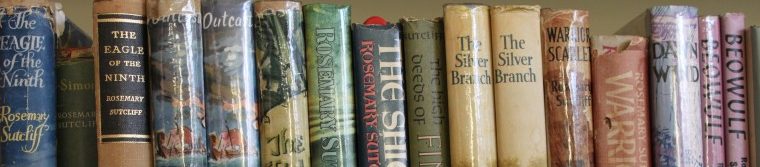
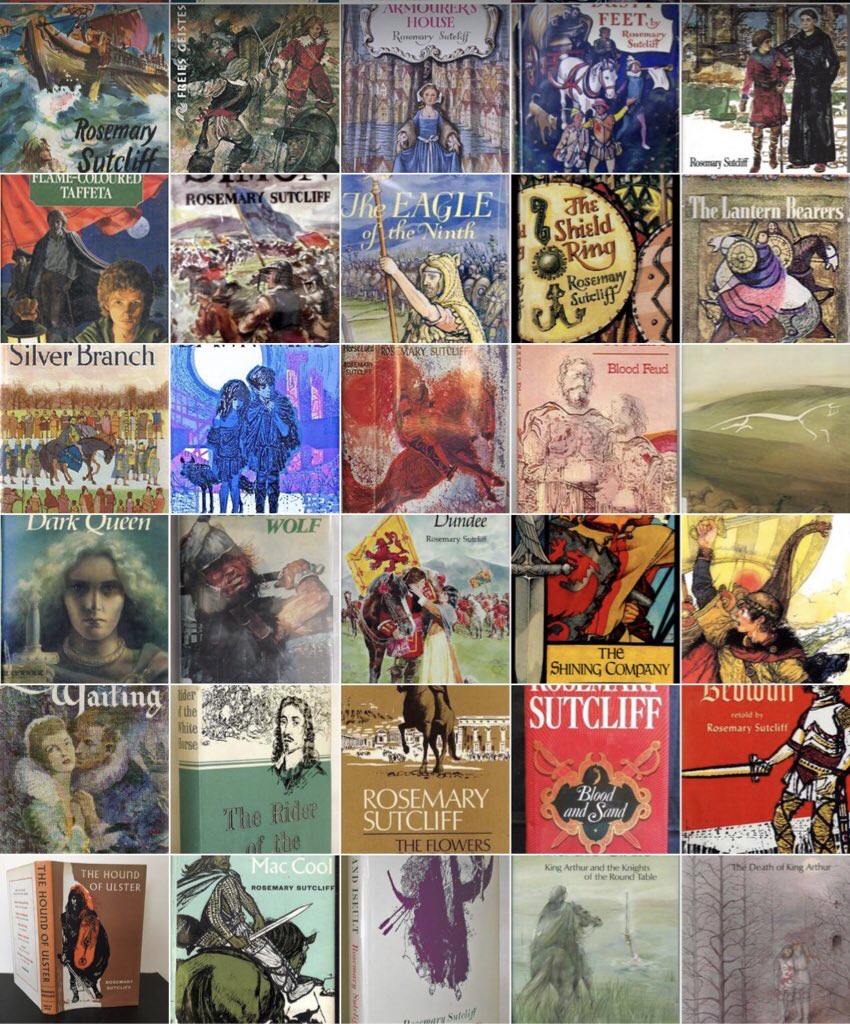
As first choice, there were mentions of: The Eagle of the Ninth, The Mark of the Horse Lord, The Lantern Bearers, Knight’s Fee, The Sword at Sunset, The Shield Ring, The Queen Elizabeth Story. Those who could not resist other mentions pointed also to: Simon, The Rider of the White Horse, Warrior Scarlet, Frontier Wolf, The Shining Company, Song for a Dark Queen, and, in addition to Sword at Sunset, the later Arthurian trilogy (The Sword and the Circle, The Light Beyond the Forest, The Road to Camlann).
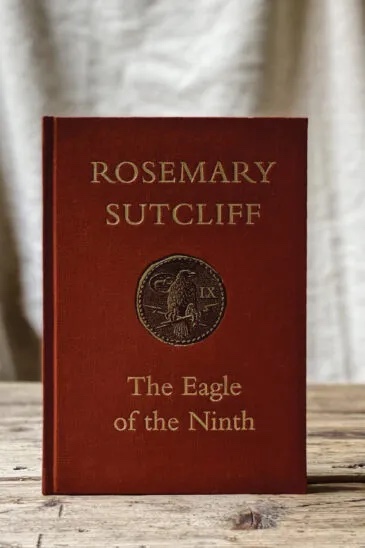
Helen, commented here that the question ‘which is Rosemary Sutcliff‘s Best Book’ is “a bit like the questions in the old Victorian confession books; what is your favourite flower?” However, she does say that there is nothing “more Sutcliff than The Eagle of the Ninth … Somehow it goes beyond liking — if you have read it, it is, and it is part of you… It contains all of those features which make up the sum of parts that are a Rosemary Sutcliff novel, plus the indefinable minstrel’s magic that makes it all alive”.
These themes are: “the hero, set apart from his peers both by his injury and his past; the landscape and the seasons as living entities in themselves; the friendship; the adventure; the scenes of slow tension and thrilling escape; the flashes of both humour and horror; the sense and quest for justice and fairness; the clash of two worlds and the places where the distance narrows to nothing between them; the relationship between man and dog, and to a lesser degree, man and horse; the slow romance; the understanding of a military world; the hopeful, ‘song of new beginnings’ ending; and Devon—of course, Devon.” Andrew agrees “how excellently put! (The Eagle of the Ninth)…is perhaps her greatest work and has everything which makes her writing her writing. Definitely one of my favourites and I have spent many hours getting to know Marcus, Esca, and Cottia”.
Renne, too, loves The Eagle of the Ninth She recalls her “delight at finding a copy with dust cover at an auction during my late twenties when I needed an old friend”. She speaks of Rosemary Sutcliff particular gifts: “how good she is on the ways horses and dogs link humans to the natural world. Also, how some men find it easier to show tenderness through the medium of their animal companions”.
For Anne, Rosemary Sutcliff‘s best book is The Mark of the Horse Lord. “Sutcliff is at the height of her powers in this magnificent and moving expression of her favourite themes: the land as a potent entity in its own right; discovery of the self and one’s place in the world; love and comradeship; the struggle to maintain the light in dark times; and freely-given sacrifice for the greater good. This story lifts the hair at the back of my neck every time I read it”. Renne too has ” love for The Mark of the Horse Lord (and Warrior Scarlet) for their focus on the isolation of those (people) different from their society and the struggle to make a place of acceptance”.
Alice has “a real fondness for The Lantern Bearers. When I first read it, I was quite disturbed by how dark and unhappy Aquila’s story was, but when I re-read it a few years later, I appreciated it so much—Aquila’s character growth, his emotions and actions seemed so realistic”. She reflected that possibly what she did not like when she was younger was that “it was uncomfortable in a way that eschewed traditional happy endings”. Over at Twitter @KVJohansen finds it “impossible to choose #BestRosemarySutcliffBook” but The Lantern Bearers “lingers powerfully”.
Rosie’s choice is Knight’s Fee “… the clash of cultures and the tugs of different loyalties, plus it’s a period that fascinates me. But there are many others that run it very close!”
Arethusarose writes that “best book is a relative term”, but when she does think of “overall best Sutcliff book”, for her “it has to be Sword at Sunset. There are a lot of Arthurian novels out there, and a lot of myth-like stories, but Sword at Sunset has become ‘the way it was’ for me, right from my first reading. It’s tied into what little history is known of that era, it ties in bits of the early myth, even bits of the ‘courtly love’ stuff which I largely reject as representing the tropes of that time. It carries Sutcliff’s long look at the underdog, the disadvantaged, growth through pain, recovery through human connection that are themes of most of her books. It is satisfying on every level, and it fits into the Dolphin Ring cycle to boot”. On Twitter, @HMGoodchild called The Sword at Sunset the “most hauntingly lovely Arthurian retelling ever”; and @tweetheart4711 said it is his #BestRosemarySutcliffBook “… (because) it’s about true heroism”.
For Andrew, The Shield Ring is the best, it is his “favourite book ever. I think that is largely because it is the first Sutcliff book I ever read and so I became attached to the characters and it was the first time I had been exposed to the deep emotional palette that is Sutcliff. @gardener_on Twitter the thinks The Shield Ring is #BestRosemarySutcliffBook, with its Vikings, Normans and Cumbria. @naomilpeb too, chooses The Shield Ring: it’s a “great story, of a not-that-well-known moment in history, and wonderfully evocative of the Lakes.”On Twitter, @kanishktharoor thinks The Shining Company, the #BestRosemarySutcliffBook, without citing his grounds; it is @Angelaroemelt‘s “all time favourite” because of its “commitment theme”.
@louiseansdell points to The Queen Elizabeth Story as #BestRosemarySutcliffBook “for the domestic detail in particular”.
Honourable mentions: as “personal favourites” (Helen) are the two Civil War books Simon (1953) and Rider of the White Horse (?); as “very close seconds” ( ?) are The Mark of the Horse Lord and Warrior Scarlet. Andrew’s “other favourites” are Frontier Wolf, The Eagle of the Ninth, and Shining Company “for their deep emotional paintings and exciting stories. What an author!”. Alice supplements her choice of The Lantern Bearers: she speaks of Song For A Dark Queen as well—”I simply love (it), for the prose and the unflinching layered character portraits, and especially the portrayal of Boudicca as a nuanced, very dark, and yet very human and very female character.” She also refers to “Sutcliff’s Arthurian trilogy—those are the versions of the stories that I accept as the default, true ones. The prose is beautiful and compelling, and the knights are so varied and colourful; so much more than the bland do-it-for-honour-and-glory’ cutouts that one often sees. Gawain, especially…”. Moving well beyond just one ‘Best Rosemary Sutcliff Book’ she also writes “I should stop or I’ll go on forever, but also The Witch’s Brat, just because!”






 ROSEMARY SUTCLIFF (1920-92)